Showing posts with label USA. Show all posts

Wednesday, April 3, 2013

6 Self Made Millionaire Case Studies

The other day I was on HARO… actually, let me rephrase that: The other day my virtual assistant was on HARO… looking for case studies of people who had become self made (my all encompassing obsession as of late). Lots of people responded to our query, but 6 stood out as legitimate and inspiring self made millionaires and I thought I’d share their stories with you.
Now do note that these stories aren’t written or really edited by me, they were either written by the person’s publicist or by the millionaire themselves (you can guess which one is which). I decided to leave them this way so my thoughts or personality wouldn’t taint the information a savvy reader can gather from these 6 self made case studies.
Enjoy and let me know your thoughts afterwards… I’m impartial to their stories but I think each has interesting and inspirational lesson to be learned from.
self made millionaire - jessie conners
JESSIE CONNERS
Company: PeppermintPark.com

If there is a strong go-getter, self-made, female entrepreneur who has followed her passions to launch not just one, but four successful small businesses; it would be Jessie Conners.
Her life is a true rags-to-riches story – she went from a trailer with no running water – to an orphanage – to opening a marketing company at 17 – to buying her first piece of real estate at 19. At 20, Jessie was a published author, then a reality star at 21 (Donald Trump’s The Apprentice).
Jessie became a national speaker (speaking at over 1500 real estate conventions) and by 27 started her e-tail company PeppermintPark.com. Now, at 28, Jessie is finally a multi-millionaire – and she achieved all of it by chasing the dream of becoming self made.
This year, real estate magnate, author and owner of newly minted PeppermintPark expects to shatter glass ceilings with sales reaching close to a million from her latest endeavor.
By having a unique member model coupled with featuring over 300 designers that appeal to women from all walks of life, she’s looking for her Minneapolis-based one stop, online shop to almost 10 thousand members.
Jessie’s fearlessness and tenacity has wowed the likes of notables from Donald Trump when she appeared on the first season of The Apprentice as the youngest contestant to date.


BERT MARTINEZ
Company: www.bertmartinez.com


self made millionaire - Bert MartinezThe keys to becoming self made and a self made millionaire are:
The saying, “As a man thinketh in his heart so is he“, not only embraces the whole of a man’s being, but is so comprehensive as to reach out to every condition and circumstance of his life. A man is literally what he thinks, his character being the complete sum of all his thoughts.
So all people are self made, the real difference between a millionaire or a billionaire
or a zillionaire is knowledge and fear. Most people know what to do but are afraid to take action. They are afraid of money, success, criticism, work, failure, success and the list goes on. Their self-esteem or unconscious belief controls their results.
Through marketing I became a self-made “millionaire” by the time I was 30 and filed bankruptcy at 32. My self esteem surrounding money reared its ugly head, then marketing and sales allowed me to hit millionaire status again at age 35.
My company Bert Martinez Communications is dedicated to teaching small business owners strategies to grow their business and their self image so they avoid the mistakes I made.


TODD TRESIDDER
self made millionaire - Todd TresidderCompany: Money Coach

I’ve been coaching clients to wealth for the last 12 years after achieving financial independence at age 35. I’ve written extensively on the keys to self-made wealth. It is my passion.
From a sound bite perspective the key to building wealth is to make more than you spend and invest the difference wisely. Rinse and repeat until wealth is achieved. No secret there. The key is not in knowing what to do, the key is in getting it done
* You must have a plan.
* The plan must be based on proven principles that lead to wealth including leverage, risk management, and much more.
* You must set up support structures to pull you through when you run into the inevitable obstacles and setbacks.
* You must understand the concept of “enough-ness” and the tradeoffs involved because the goal is happiness and fulfillment – not wealth. Wealth is a tool or vehicle but never the end goal.
I retired at age 35 by saving roughly 60-70% of my earned income and investing it wisely. I published an article explaining exactly how the process works here.

DEBRA COHEN
Company: Home Referral Network

self made millionaire - Debra CohenBecoming a self made millionaire, doesn’t only require hard work, it requires discipline. Earning millions of dollars is irrelevant if you spend more than you earn. Living lean and saving for the future have always been my mantra in addition to maintaining an affordable and conservative lifestyle.
As soon as my Homeowner Referral Network business started to generate a good income, my first priority was to save at least 1/2 of what I made. The millionaire next door doesn’t necessarily drive a Bentley–it may be a 10 year old Honda.

Several years ago after the purchase of our first home, not only were my husband and I struggling to make ends meet but we faced the all too familiar challenge of finding reliable home improvement contractors. Based on our experience, I decided to create a business to address this need in our community.

HOME REMEDIES OF NY, INC. is a Homeowner Referral Network (HRN) for homeowners seeking reliable home improvement contractors. I pre-screen and represent a network of more than 50 home improvement contractors ranging from painters, plumbers and carpenters to general contractors, architects and decorative painters. Contractors in my network pay a pre-negotiated commission on any work secured and my service is free to homeowners.
I started my business with just a $5000 loan from my husband’s retirement savings plan and Home Remedies has grossed more than $4 million to date.

AJ KHUBANI
Company: TeleBrands
self made millionaires - AJ Khubani
TeleBrands markets “As Seen on TV” products to the consumer audience. From the PedEgg and Windshield Wonder to today’s new Chef Basket and One-Second Needle, TeleBrands helps consumers find a common solution to everyday problems.
AJ Khubani founded TeleBrands at the age of 27 with his life savings of $20,000. While in college, Khubani began marketing an AM/FM type radio in the back of the Nation Inquirer for $10.
He broke even. But, that lead him to creaing many new products and moving into television infomercial advertising. In the late 1980s, he began marketing the AmberVision Glasses for $10 at retail establishments — the first time an “As Seen on TV” infomercial product was available in a bricks and mortar environment. The product became a household name and a new approach to the direct response television (DRTV) industry was born.
Khubani offers the following advice:

  • When you have a new product idea, start by “Googling” the idea — see if someone else invented or marketed it before you did. Take the time to do your research.
  • Apply for a provision patent for just over $100 at www.USPTO.gov. There is no need to begin with expensive lawyers and spending your entire savings on your product/idea.
  • Learn the marketplace. If you are creating a consumer product for a specific audience, is that potential audience large enough to result increased revenues? Be realistic in your goals.
And most importantly — enjoy what you do!

TONY HARTL
self made millionaire - Tony HartlCompany: Planet Tan & Selling Sunshine (book)

There are several keys to becoming a wildly successful, self-made millionaire. Creatively solving problems is important, great stewardship of money is a must over the long-term, and a large tolerance for risk is key as you start out.
But what really separates the successful from the unsuccessful, in my experience, is an unrelenting desire to accomplish your goals.
This is NOT an unrelenting desire to make money; it’s the passion for making your ideas into reality. Money hasn’t been the main drive behind any of the successful people I’ve had the pleasure of knowing. There are more interesting things in the world than currency, after all.
People with passion who solve problems in new, relevant ways will make money, and those who deal with adversity, take logical risks, and put their money where it matters the most will grow their businesses quickly.” – Tony
Tony Hartl founded Planet Tan in 1995 and built the company into one of the most recognizable brands in the Dallas area. He currently sits on the National Foundation for Teaching Entrepreneurship Board and has been a guest lecturer at the Caruth Institute of Entrepreneurship at SMU’s Cox Business School. He has been featured in numerous media outlets, including Inc. magazine, Fortune Small Business, and the Dallas Morning News.

Source: www.escapingthe9to5.com

How Gang Life Helped One Man Become A Multimillionaire Entrepreneur

Ryan Blair's rag-to-riches story is no marketing shtick. He may have dubbed Ryan Blair gang entrepreneurone of the chapters of his New York Times bestselling book, "my philosophies from the jail cell to the boardroom," but Blair's childhood isn't naturally packaged into slogans. And the things he learned on the streets of Los Angeles, and from two stints in juvenile detention, did help him build a series of successful startups, the latest of which took in $231 million in sales last year.

Growing up, Blair idolized gang culture, he told AOL Jobs. His older sister was a gang member, selling the weed his father grew. After his father abandoned the family when Blair was 13, and his mother started drinking, he needed money. Initiated into a gang with a brutal beating that left him with a mouthful of broken teeth, he started peddling stolen car stereos, and learned the first principle of business: "Buy low, sell high."

The Entrepreneurship Of PovertyRyan Blair teenager prison

"The roots of my entrepreneurial mindset lie in seeing the entrepreneurial work of poverty," Blair says. "The working, hustling rich and the working, hustling poor are the same species, except one plays by society's rules. Or makes them, some would say."
Blair bulked up. He was 260 pounds at his peak, his body a patchwork of gang tattoos. The more intimidating he appeared, the less he would have to fight. "When you're 15 and you see someone get murdered," he says, "survival becomes your goal."
That idea, in a somewhat modified form, is true in the business world too. Success depends on the ability to adapt to your surroundings and provoke the reaction you want. "Every board member creates his signature, a signature of his insecurities overcome," he says. "A combination of old-fashioned DNA, anthropology, culture, ambition and aspiration."
Blair's "signature" is, of course, his past -- a past that he finally put behind him during his second stint in juvenile detention. His first came when he was 14, after he attempted to rob a restaurant but set off a silent alarm when he threw a rock through the window.
Gangsters, he now contends, are "entrepreneurs who steal from other entrepreneurs." The best thing small-business owners can do, he thinks, is to "educate the local hoodlums" in legitimate business skills -- "as a form of insurance." That's exactly what Blair now does with his foundation.

A Book, A Letter, A New Life

Blair was locked up for the second time at age 16, for a strong-arm robbery and battery. He says that he was beaten up on the first day, the last time around, so he decided to go on the offensive. As he puts it in his book, "If you let someone take your milk the first day, they'll start taking it every day." Blair incited a riot.
Over the next 30 days, most of it spent in solitary confinement, some thoughts gnawed at Blair. Mainly the fact that, at the judge's whim, he could be spending the next four years of his life behind bars.
He read his first, and only, work of fiction at this time, Stephen King's "Firestarter," sounding out the syllables phonetically and listening to them bounce off the walls. Today, Blair has read over 1,000 books and remembers most of what he reads, a remarkable feat for a dyslexic high school dropout. He says that it's because he doesn't read visually, but auditorily, thanks to that excruciating month he spent with nothing but his own voice.
Blair wrote a letter to the judge, with some spelling assistance, begging for leniency. "You should be writing in college," the judge replied, "not in prison."
When Blair was released, he found his mother's home ransacked -- his fellow gang members assumed that he'd become a "rat." Blair decided to begin the long, delicate and sometimes life-threatening process of leaving his gang. He got a job picking up the cans dropped off for recycling, meeting what he calls the "lowest form of life": the crackheads clutching at nickels for the next hit, the drunk who turns in his beer cans just to scrape together enough cash for the next 12-pack.
Nothing spurred Blair upward faster than staring into the eyes of the bottom. He worked almost every waking hour of the day, seven days a week, and still does. His mother started dating a new guy, a successful real estate entrepreneur, who moved them out of their crummy neighborhood, let Blair drive around in his Cadillac Allante, and hired him to do odd jobs. Blair suddenly appreciated the connection between wealth and hard work.
Soon he got a job at another company, answering phones, but impressed the higher-ups when he covered a shift at the data center. Computers had always been a passion of his. After all, he says, he'd "liberated a bunch."


Addicted To Business
Within three years, Blair became vice president. His starting salary had been $6 an hour. His new salary was $100,000 per annum. The next year, he founded his own 24-hour computer repair company, at age 21. Blair claims that this rapid rise came thanks to his ability to "hustle" and his "nothing-to-lose attitude," but no doubt his charisma helped too. Blair has the charm of a practiced motivational speaker -- which he is.

Blair claims that he "sees the world as a technologist." His current company may not seem so technical: ViSalus is a weight-loss and fitness program. But it's based on the idea of challenges; people set their goal, and get prizes for completing it. It "game-ifies" weight loss, like the many websites that keep people coming back through badges and give-aways, and anything that will tickle the brain's reward center. Blair approached his book similarly, making the chapters short enough to give his readers a regular jolt of accomplishment.
He's approached himself the same way too. "I've trained myself to be addicted to business," he says. And that's what drives him, not some misty sense of a legacy. He's requested that his foundation be wound down within 10 years of his death, along with the 90 percent of his assets that he's dedicated to it.

In 2004, Steven Levitt said that being in a gang is "perhaps the worst job in all of America." In 2012, Blair says, "it's one of the only jobs." Kids are increasingly turning to gang culture for money and meaning. Blair hopes to prove to them that they have the skills to get a lot more money and a lot more meaning, if they play by society's rules.

Source: jobs.aol.com

High School Dropout to Millionaire

I have been reading Tycoon Talk for a while, but I forgot there was a success story section. I wrote my success story for 2 other sites and it has been getting a nice response so I decided to share it here. I hope this can be inspirational and helpful.


The Foundation: My first job

When I turned 16, I got a job at a ski shop after school and on weekends. I started out doing a lot of garbage work, but eventually I was allowed to do some sales. I was a shy kid so I had trouble speaking to customers and answering phones. When I was 16, I looked 12, so that did not help. By the end of the first season, I was getting very comfortable with sales and I was producing the most sales for the time I was putting in.

After a couple years, I learned how the business was run and I took a larger role in the shop. Even though I was never put in a management role due to looking very young, I was basically doing everything a manager was doing.

Quitting my first job...

I was getting very frustrated that I was taking on a lot of responsibility, but never given a management role. At the time, I don't think I understood why. I came to the realization that I did not want to be stuck in a job like this anyway. I wanted something bigger. I was always hungry for money and always dreamed of doing some sort of big business that allowed me to be independent. This job would never lead to that.

I am a person who succeeds when put under pressure. Even in school, I waited until the last minute to do my homework or a major project. Now, I stay up late at night to do my work because I race to get work done before I go to bed. I have produced my best work and ideas late at night.

At the time, I knew this is the type of person I was and if I would succeed, it would not be from building a business on the side while I was working at the ski shop. I needed more pressure. The only way to do that is quit.

This simple job at the ski shop gave me the basics of sales and business management at a young age, but it was time to move on.


Dropping Out Of School:

I went from a public school to a private school then back to a public school for high school. The difference between the private school I attended and the public school was huge. I felt no pressure in the public school. I slept through my sophomore and junior year. I never did homework or took a book home. I still managed to pass with B's and C's. It was pathetic. Teachers barely new me, they would give slackers way to get bonus points, there was no trust, etc. The education was a joke. It was like a review of what I already did in the private school. I was never taught how to think for my self or how to figure things out on my own. They only taught trivial things. I was being prepped to be a good little employee and do everything by the book.

Half way through my junior year, I realized this was a waste of time. I wanted to quit and work full time at the ski shop to get more real world experience and see what happens from there. I just knew high school was not helping me grow as a person or intellectually.

I met with the guidance counselor and principal. Neither had any idea who I was. They said, "We don't even know you. You have never been in trouble before. We don't understand why you are dropping out." I just laughed. That was one of the exact reasons I wanted out. I was just another one of the herd. You have to be in trouble or an all-star to be noticed. I was neither because I had no motivation to be an all star and no reason to cause trouble.

I loved the close family atmosphere of a private school. Everyone knows everyone and the teachers are really involved in more than your education. They knew me as a person. I didn't need to be a trouble maker or an all star to be noticed.


Stupid Ideas: My First Try At Business

It is usually not the idea that is stupid, it is the plan. Most people are so blinded by the thought of how much money they can make, they don't think of all of the ways they CAN'T make money with their idea. I found this to be the most important thing when planning a new business.

"Stupid ideas" are needed if you want to succeed at business. Hopefully some of those stupid ideas don't cost you much money. Stupid ideas are a learning experience. You learn what doesn't work.

If you have a successful business that you started on your own, then I am sure you hear people coming to you with ideas all of the time. They are so excited and motivated as they tell you their idea to make millions. Then they ask you, "so what do you think?" It is so hard to tell them all of the things wrong with the idea and ruin their dream, but they are blind to all of those pit falls. They have never tried to build a business to know how many things are wrong with it.

When I start a new business, I spend a ton of time running numbers on different scenarios. The scenarios don't just assume x number of customers spending y. You must be your businesses worst critic and find all of the holes before you fall in them.

My stupid ideas...

After quitting my job at the ski shop, I knew I wanted to work on my own. It was the late 90's the internet was all the hype and everyone was talking about the money to be made there. This was my opportunity to get in the ground floor. My first idea was to see what other successful people were doing. I saw one of the late night infomercials and wanted to give it a try. Yeah, it was him...Don Lapre and his famous"tiny classified ads"! Hey, I was young, hungry and gullible. He had a "new system" that would work online and I thought it was worth a try since I had no idea how to make any money online. Obviously this did not go anywhere.

I jumped from one idea to another. I searched for ways to make money online and that lead me to one Multi-Level Marketing program after another.

It always seemed like the only way to independent wealth was MLM. Every successful person on the TV was saying this. It was all over the internet. It had to be the way. It just made sense. You just build a "downline" who make money for you. It seemed so easy.

I just felt like I had to get in the right MLM program. I taught myself how to build sites and do some basic marketing. I would build sites and try to join marketing networks where i could trade some clicks. I had no money for advertising, so i was trying very pathetic marketing tactics. So many sites offered "the best way to get traffic to your site for free" and I fell for them all.

Nothing was really working. I managed to get some sales here and there, but i was not making money. I was getting better at building and marketing sites. Eventually i built up downlines of hundreds of people. Still no money.

I realized that MLM are horrible businesses. Actually they are not real businesses at all. The argument they always made was, "all businesses are multi-level". They would give examples of McDonalds or manufacturing as being multi-level. It is true those businesses, like most, have levels. There is the manufacturer or supplier, usually a distributer and then the end retailer/sales person.

They made it sound like the levels in MLM are just like any business. The reality is the "levels" in MLM are ALL in the bottom level of normal business levels. I was just a salesman like any other salesman except my income is commissioned based. I either made a commission on a product sold or products sold by people in my downline.

The natural problem with MLM is everyone is attracted to it because it is sold as a way to make money while others work for you. Basically, it attracts lazy people. This is why i had hundreds and sometimes thousands in my downlines, but not making money. No one in my downline wanted to work.


Better Idea: Just Basic Business

Instead of looking for the perfect business, I realized I should just be doing something basic. I was learning how to market websites online. I was getting thousands of people to join MLM programs, so I obviously was learning how to get visitors and get them to join a program. I was just marketing the wrong thing. I needed to market normal things so I can get paid a commission right away instead of waiting for someone else to perform.

Affiliate marketing seemed to be the way to make great money online with no expense. I basically needed to build sites and promote some offers and the cash should roll in.

I found several products that were in the "make money" market which was similar to the MLM market. I felt like this was an easy market to capitalize on. I eventually taught myself how to get my sites to rank in the top search engines such as Alta Vista, Lycos and Excite. I built small sites that showed people html tricks, marketing strategies, which affiliate programs were good and how to market them. I received commissions when someone would signup for software that I recommended for marketing online, when someone signed up for an advanced marketing guide, etc.

It was all starting to add up. I also built sites for something called "paid to surf". These were becoming very popular back then and there was some big commissions to be made. I was one of the top ranking sites for many of the keywords back then and generated around $10,000 in profit each month from these programs... that is until they all stopped paying and went bankrupt in the dot com crash.

Ok, it was time to make sure the companies I choose to promote can actually pay me what they say after all of the work I do.


Secrecy: Growing Quietly To Avoid Being Eaten!

Despite taking a hit with the "paid to surf" companies, I was still generating good revenue and I wanted to expand. I knew how to rank at the top of the search engines. (It was easy pickin' back then!) I just needed to scale up. I built many more sites for different products and different niches to get them ranked in the top of the search engines. I was going for a large quantity of small sites to generate more and more revenue.

After a few years, I saw a problem. Affiliate marketing is EXTREMELY competitive and had a very small cost to entry. This means once you start making money and people know it, they copy exactly what you are doing. It is cheap, it is easy, it works and it is a pain in the *** to battle. I went silent for 8 years. Everything I did was a big secret and this was the case with all of the successful affiliate marketers. Even the affiliate marketers who sold "how to make money online" programs kept quiet about their actual money making sites. No one wanted their strategies, site layouts, traffic sources or anything else getting leaked to other affiliate marketers.

One of the important rules was never to talk about your success in affiliate marketing and show one of your sites. Some people did this and I stepped in and took a big share of what they had.

I built hundreds of sites in many different markets. I was sometimes building a site a day. Each site had to sell a product in order for me to make a commission. I needed more than just traffic from search engines, I needed to convert that traffic into a sale. After building hundreds of sites and trying countless strategies, I discovered ways to increase conversions to maximize my revenue from each site.

Some of the sites I built were not small. I put a lot more attention and money into some of them.


Fundamental Problem: I had to get out

By 2006 I had an empire of sites generating over $2 million a year. I felt on top of the world. I was making so much money and could afford anything I wanted, but I felt like I had to make more. I felt something was wrong. Making that kind of money should of made me feel very comfortable. Something was off.

I felt maybe it was not a good thing my business was built off of a ton of small sites. My most successful sites made millions by themselves, but I always felt like they could die at any time.

In 2007 I finally realized why my model was so fragile. Despite expanding, my income did not grow. I did a lot of digging and found the problem.

Like I mentioned before, affiliate marketing is very competitive. Any other marketer could copy what you are doing and hurt revenue. I was always a step ahead of them and very secretive. There was a bigger enemy. The actual companies I was promoting.

In the first 10 years of online affiliate marketing, companies relied on affiliates to drive a massive amount of business. Good online marketers would never work for one company at a regular salary. If you knew how to market anything online, then there was too much money to be made by sending traffic to an affiliate program for a commission. As colleges began to teach basic internet marketing, more and more kids would come out of college eager for a low salary job. Colleges never sell the dream of becoming a millionaire. They pound it in your head to graduate with good grades and start at a low salary in a good company where you can grow.

These kids out of college now had enough basic knowledge needed to copy what I was doing and dumb enough to do it at a low salary. The companies I promoted hired them and told them to copy what their top affiliates were doing. I was usually one of them.

The companies I promoted had all of the data from my sites. They tracked how I sent them traffic. They simply had their new employees make sites like mine (which converted traffic like crazy) and then they would market their sites like I marketed mine. I worked so hard keeping everything I do secret so other affiliates could not see everything I do, but I could not prevent the companies I promoted from seeing everything.

The entire affiliate industry was falling apart. Now, it is just a small fraction of what it was.


Selling: I finally get out

In 2008 I started shopping my business to all of my competitors who I knew were larger than I was. The only offers I would get is 1 or 2 months of revenue. I kept working on one potential buyer. He said "no" to me a dozen times. I would keep pressing to show him how he could profit from the buy. The recession hit and it was a hard sell, but I managed to get him to see the upside. I managed to unload everything for a pathetic price of $700,000.

I was certain I wanted to sell despite getting what I could make in 6 months. First, I did not feel comfortable in the ability to make long term money with the business and I wanted to be able to focus 100% on something else. Second, I was bored of what I was doing. Finally, the biggest thing that pushed me was the recession. When the market collapsed, I knew it was a huge opportunity to make a massive ROI in stocks.

I felt releived when it was sold and excited to get all my cash into the stock market.

If I had to do it all over again, I would have focused on a few sites and made them huge.


Doubling Down: Making money from a stock market collapse

I could have sold my business 8 months earlier if I really wanted to and I would have received twice the money. If I did, I would have surely invested everything in the stock market. Investing in the middle of 2008 would have surely bankrupted me.

Selling my business in November 2008 for a pathetic amount of $700,000 and getting the cash when the S&P was around 700 points turned out to be perfect. I was actually lucky to sell it for a fraction of what it was worth when I did.

I have always had a fascination with investing and read dozens of books on the subject. I was heavily researching stocks for several month in anticipation of selling my business. I wanted to invest in companies that were very solid and had the cash or assets to handle the credit lockup. I wanted very strong fundamentials. Companies that increased their revenue, profits and market cap ever year for 5 to 10 years, not just a few years. Any company can ride a hot market or a bubble. I wanted companies that could grow in a recession.

I read annual reports on many companies and dug for any information I could find. I settled on around 10 stocks and began investing. By the end of 2008 I doubled my net worth.

The first 3 months of 2009, stocks had one of the biggest declines ever. I managed to ride out the storm. By the end of the year I still made 6 figures from the investments despite ignoring the market for most of the year. I could have taken advantages of the wild swings, but it was too stressful. One day everyone was saying we would all be broke as the market would go down a couple percent. The next day, all of the same people would scream about all of the money that can be made in this market. I did not want to hear that stuff and took the rest of the year off.


Current Day: Leveraging what I know and swallowing my pride.

My entrepreneurial itch was really getting to me. I love investing, but I wanted to start another company. For years I always had the idea of becoming a consultant, but I had such a bad view of them. I thought if they could really do what they say, they would do it instead of talk about it and experiment with the budget of clients. The fact is, most consultants are idiots who really don't know what they are doing and just talk a good game. That does not take away from the other fact that there is HUGE money in consulting and those who really know what they are doing can make big money. I swallowed my pride and decided to become a consultant.

I started a firm, Prodigal Solutions, that focuses on SEO and Conversion Optimization. These were the 2 areas I had a ton of experience and I knew I could leverage this experience to build a new company for myself and help other companies expand. Despite my experience, I found that it is a hard sell. Major companies want to see case studies and testimonials. How do I get these without clients? I had to start with many smaller companies to build up some case studies. Although, larger companies want to see case studies from larger companies. Getting this firm up to the size I want is taking much longer than I thought. SEO is not something that happens overnight. It takes time to build up solid case studies for that.

Conversion rate optimization is where the real money is for companies. Optimizing a site to convert as many visitors into customers creates huge return and makes everything much more profitable. It just opens up so many doors when a company has great conversions. This is how my business was so successful. My sites converted visitors at amazing rates and that allowed me to spend more money per site for marketing.

The unfortunate thing is many companies feel that their current website designers or developers can do some basic work to increase conversions. Every SEO, design, and consulting company is offering conversion optimization now which is kind of funny. Oh well, more business for me down the line when those companies fail to help their clients and those clients realize how important conversions are. I will be there to help them.

So, there have been challenges in my new business that took time to overcome. After the first year, Prodigal Solutions has hit 6 figures in revenue. Definitely not the income I had before, but it should be profiting in the 7 figures within 2 years.

I love business and I love helping other companies work on their overall business plans, optimize their site and help with marketing. I am doing what I love again.


Source: www.webmaster-talk.com

Sunday, September 18, 2011

A business success story — with a twist

He became a father at 18, dropped out of school and found a factory job to make ends meet, until hard work and a twist of fate led him to a fortune he’d never imagined. 
It's almost like a fairytale. A little Jewish street kid from the wrong side of the tracks buys some defunct assets and grows the enterprise into what today amounts to a $600 million a year company.
Gerry Shreiber’s success began at the ballpark, home not only to the hallowed hot dog, but that other classic stadium snack: the salty jumbo pretzel. This doughy concoction might never have been a hit were it not for Shreiber’s vision of a pretzel empire.
“Every time I see one of our fans going up there and buying it, I feel a special kind, you know how the back of your neck kind of — you get that little feather feeling in there,” Shreiber said on a recent visit a to Philadelphia Phillies home game.
As CEO of J&J Snack Foods, Shreiber is the man behind the pretzel.  With a roll and a twist, J&J churns out a half-billion pretzels a year.  It all began in 1971 when Schreiber struck up a conversation with a salesman who told him about a failing pretzel company.
“A couple of weeks later, I bought the assets of a bankrupt soft pretzel company for $72,000,” he said.
That $72,000 bought Shreiber some old baking equipment and an eight-person company selling a little-known product.

“The traditional stadiums, baseball stadiums, in those days had a very limited menu,” he said. “They didn't know what a soft pretzel was.”
Convincing stadiums, movie theaters and other vendors that soft pretzels could be the next big thing took some creativity.
“It didn't have a name,” said Shreiber. “So I thought — ‘Super Pretzel.’ Super Pretzel, Superman. And I found these special trees with hooks on it.  And I built a glass box around it. And we attached the motor to it. And all of a sudden we had a revolving tree.”

Dreaming big 

With that, the super pretzel was born and super sales quickly followed. At the company’s factory in Pennsauken, N.J., J&J bakes 2 million pretzels a day.
“I instructed my people that I want to have a line which feeds the dough automatically, very little labor, that will produce 5,000 pounds an hour with hardly anybody touching the product,” he said. “And my chief engineer said to me at the time, ‘Gerry, you're dreaming.’ And I said, ‘All right, we'll call it the dream line.’ ”
J&J has made Forbes magazine’s list of the “200 Best Small Companies” seven times since it went public in 1986. And it doesn’t stop with pretzels. Shreiber has a knack for turning around distressed snack food brands — recent acquisitions include Fruit-A-Freeze and Whole Fruit sorbets. 
The simple, soft, salty pretzel has brought him a personal fortune worth over $100 million.
Shreiber also has a soft spot for animals and keeps 30 horses, six dogs, five cats, two goats, one pig and one bunny on his New Jersey farm.  He is a prominent donor to animal's charities — including the University of Pennsylvania School of Veterinary Medicine — and starts every day with a walk on the farm, animals in tow, dreaming up the next super snack food idea.
“I've been doing this now for 36 years,” he said. “And if I tack that on — for the next 36 years as much — I think maybe that'll set a record.”
For each of those 36 years, he’s seen steady growth: 144 consecutive quarters of increased sales and profits. 
Something for budding entrepreneurs to chew on.

Source: msnbc.msn.com

Sunday, September 11, 2011

Rags to riches: Jon M Huntsman

If one man could symbolise the American Dream, Jon Huntsman would be a key candidate.

The 61-year-old father of nine is a rags-to-riches billionaire with downhome family values. He donates hundreds of millions of dollars to charity.

His company, Huntsman Corporation, is the biggest privately owned chemical company in the US, and the man who founded it has no intention of ever taking it to the stock market. It would mean profits to shareholders, and he prefers to pass money to charity.

In the US, Mr Huntsman's generosity is legendary. When Armenia was hit by an earthquake 10 years ago and 100,000 people left homeless he built a concrete plant to help rebuild their houses. Then there is his work for the homeless in the US, and millions more donated to charities worldwide.

Born in Idaho, the son of a music teacher, Mr Huntsman describes his upbringing as 'meagre', but he won a scholarship to the noted Wharton business school.

After graduating he married his childhood sweetheart Karen and embarked on a career in the California egg business. Aged 30 he became boss of an egg packaging business which gave the world the plastic egg box; he decided to go into business on his own.

While his first plastics plant was being built he went to work in the White House, as an aide to President Nixon. At the same time he was buying music rights from labels like Capitol and CBS, packaging them together and using television to get sales. Twenty one of his first 23 albums - with titles like Greatest Hits of Rock & Roll - went gold.

By 1974 he had developed the clam-shell carton for hamburgers - and sold it to McDonald's. By 1980 he had sold up and started working for the Mormon church for three years, only to return to business, buying out Shell's polystyrene business.

Huntsman - with John, Karen and six sons on the payroll - is now among the world's biggest producers of rubber, cling-film, bread bags and ingredients for soaps, toothpaste and detergents.


Source: guardian.co.uk

Friday, August 19, 2011

25 of the Greatest Self-Made Men in American History

While the popularity of the self-made man may have faded in recent times, it is worthy of being revived. The concept of manly personal responsibility has greatly eroded, and too many young men today believe they are the helpless victims of their circumstances. The following list provides a strong remedy against such thinking. It is full of stories of men who refused to be satisfied with their lot in life and instead chose a different, more extraordinary path for themselves. They set a course for greatness and proceeded to work without rest until their goals became a reality.

These stories prove that it doesn’t matter who your parents are, where you’re born, or how much education you acquire; the difference is in your character and willingness to do whatever it takes to be the best and achieve your dreams. As we honor these self-made men, we hope to inspire you to join their ranks. As Frederick Douglass said:

Though a man of this class need not claim to be a hero or to be worshipped as such, there is a genuine heroism in his struggle and something of sublimity and glory in his triumph. Every instance of such success is an example and help to humanity. It, better than any mere assertion, gives us assurance of the latent powers of simple and unaided manhood. It dignifies labor, honors, application, lessens pain and depression, dispels gloom from the brow of the destitute and weariness from the heart of him about to faint, and enables man to take hold of the roughest and flintiest hardships incident to he battles of life, with a lighter heart, with higher hopes and a larger courage.

This list of great self-made men is not all-inclusive; both the past and the present are studded with far too many remarkable strivers to possibly cover them all. But here we highlight some of the most extraordinary of these stories. While some of these varied men were far more virtuous than others, none were saints. All had flaws and made mistakes. Some were ruthless in their pursuit of success. Any time a man’s life is held up for an example, it is incumbent upon the reader to glean the valuable lessons to be learned from that life, while discarding those things which he finds distasteful.

And now the list:

Benjamin Franklin, 1706-1790
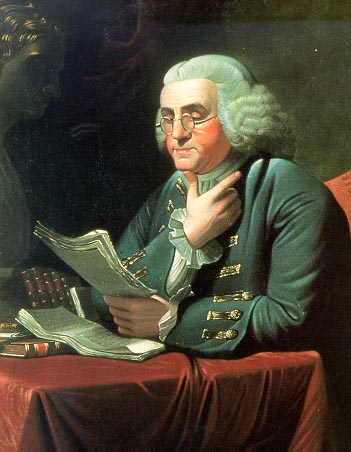
benfranklin

Does thou love life? Then do not squander time; for that’s the stuff life is made of.

Franklin’s life is the pattern from which all other self-made men have been cut. His rhetoric of hard work, ambition, and thrift was not merely a philosophy he preached; it was he code by which he lived his life. None of his successes came by chance; they were created by the ceaseless way in which he organized his life to maximize productivity. Such discipline was necessary if he ever hoped to rise from his humble beginnings. Franklin was the 15th of 17 children born to father Josiah Franklin, a candlemaker. Granted only two years of formal schooling, Franklin supplemented his knowledge by constantly having his nose stuck in a book.

When he was 17, young Ben struck out on his own and traveled to Philadelphia. Unlike other aristocrats of the period, who used slave labor to free up time for their other pursuits, Franklin created an enormously successful printing business which allowed him to retire and became a veritable Renaissance man. His accomplishments are too numerous to list. As an author he penned the Poor Richard’s Almanack, his famous autobiography, and numerous classic essays. As an inventor, he created the lightning rod, the glass harmonica, the Franklin stove, bifocal glasses, and the flexible urinary catheter. As a thinker he established the Junto discussion group, the first subscription library, and the American Philosophical Society. As a scientist he made important investigations into the nature of electricity. He served his country, state, and city as a councilman, postmaster, recruiter of the Pennsylvania militia, Speaker of the Pennsylvania State House, delegate to the Second Continental Congress, ambassador to France, President of Pennsylvania, and Founding Father. Not bad for the son of a candlemaker, eh?

Ross Perot, 1930-
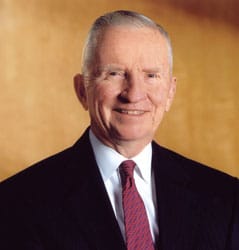
ross_perot

Most people give up just when they’re about to achieve success. They quit on the one yard line. They give up at the last minute of the game one foot from a winning touchdown.

Born in Texarkana, Texas to a father who worked as a cotton broker, Ross Perot could have lived and died in obscurity like thousands before him. But from a young age, Perot’s ambition set him apart. He became an Eagle Scout in high school and then attended the Naval Academy where he helped establish the school’s honor code and became class president and battalion commander.

After leaving the Navy, Perot became a salesman for IBM. Perot quickly distinguished himself from the pack, filling the year’s sales quota in two weeks. Full of entrepreneurial ideas, but ignored by the higher ups, Perot left IBM in 1962 to found his own company, Electronic Data Systems. Things started off rocky; Perot’s initial attempts to sell their data processing services to corporations resulted in 77 rejections. Yet Perot persisted, won EDS government contracts, and turned the company into a technology powerhouse. EDS was eventually bought by GM for a cool 700 million. Not content to rest on his business laurels, Perot began to involve himself in political policy issues, an interest that culminated in his famous run for the presidency in 1992. Garnering the largest percentage of the popular vote as a third party candidate since TR’s run in 1912, Perot’s success surprised the pundits and assuredly a lot of folks back in Texarkana.

John D. Rockefeller, 1839-1937
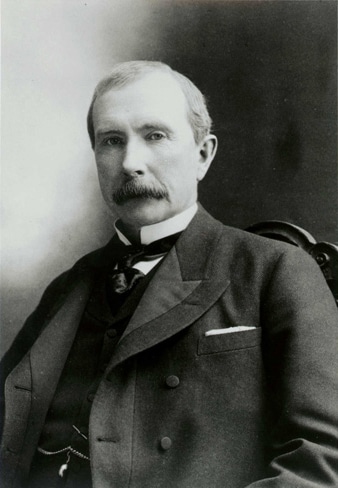
john_d_rockefeller_1885

I do not think that there is any other quality so essential to success of any kind as the quality of perseverance. It overcomes almost everything, even nature.

John D. Rockefeller needed neither a trust fund nor the example of a successful father to become the richest man in American history. His dad was a salesman who was rarely at home as young John grew up. Rockefeller was left to forge his own path. As a young man, he took a job as an assistant bookkeeper, saved his dough, and then partnered with others in buying a couple of oil refineries in Cleveland. In 1870, Rockefeller incorporated his holdings into Standard Oil.

Rockefeller’s business plan was simple; by obsessively increasing the efficiency of his refineries and pressuring railroad companies for discounted shipping, he successfully undercut and then bought out the competition. It was said he had the “soul of a bookkeeper,” and he loved to pour over his figures and see where waste could be eliminated. Utilizing both vertical and horizontal integration, Rockefeller soon owned nearly every aspect of the oil business and controlled 90% of the kerosene market. Such success netted Rockefeller great wealth; when he retired he was estimated to have accumulated a $1,500,000,000 fortune. Having won this wealth through his own toil, he didn’t just sit on this money. He donated much of it in hopes of providing others with similar opportunities for success.

Ralph Lauren, 1939-
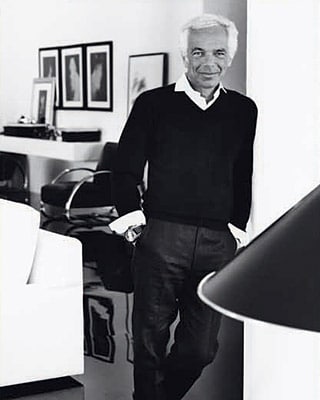
26-mh0608

Knowledge is not a passion from without the mind, but an active exertion of the inward strength, vigor and power of the mind, displaying itself from within.

Growing up as a Jewish kid in the Bronx, Ralph Lauren never hung out at the country club, played polo, or went sailing on a yacht. Although his brand is now a famous symbol of gentility and affluence, Ralph Lauren’s own beginnings were far more humble. Born as Ralph Rueben Lifshitz, his parents were Ashkenazi Jews who had immigrated from Belarus, and his father was a house painter. The family lived in a small apartment, with Ralph sharing a room with his two brothers. Ralph’s mother hoped he would become a rabbi, but from a early age, Lauren was drawn to fashion and entrepreneurship. He worked after school as a stock boy and sold handmade ties to his classmates in order to purchase stylish suits.

Lauren attended Baruch College for two years, but then dropped out. He never went to fashion school. After a stint in the army, he became a salesman for Brooks Brothers. They weren’t interested in helping Lauren develop his own line of ties, so he then went to work for Beau Brumwell Neckwear which allowed him to design and sell his own “Polo” brand ties in their showroom. The ties became popular and other stores started carrying them. Lauren started designing women’s and men’s wear, and of course, introduced his now famous Polo shirt. He soon had enough money to open his own store and develop his brand into an empire. Today, Lauren has 35 boutiques across the country, has expanded his brand to include home furnishings and cologne, and currently ranks as the 76th richest man in America.

Frederick Douglass, 1818-1895
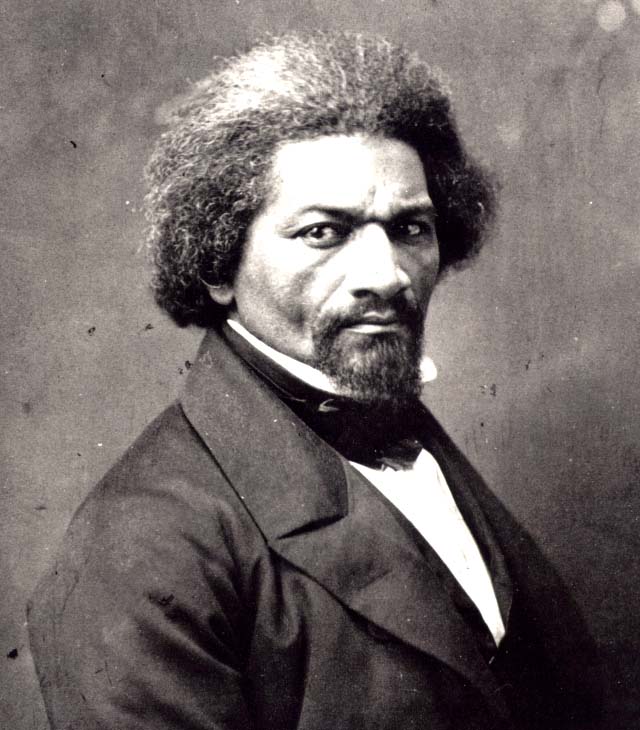
4fred16b

Allowing only ordinary ability and opportunity, we may explain success mainly by one word and that word is WORK! WORK!! WORK!!! WORK!!!!

When it comes to rags to riches stories, there are no rags lowlier than those worn by American slaves. Rising from the shackles of slavery to extraordinary success required monumental amounts of hard work, tenacity, and passion, and Frederick Douglass had these qualities in spades. Douglass understood that nothing in life would ever be handed to him. When his master’s wife, who had been teaching him the alphabet, was reprimanded for doing so by her husband, Douglass continued to learn to read by interacting with white children and working through any written materials he could find. When he was traded to the cruel mastery of Edward Covey, who regularly whipped Douglass, Douglass confronted his master, getting him to back down and never raise his hand to him again.

In 1838, Douglass took his greatest risk yet and escaped from slavery to Massachusetts. Douglass soon rose to prominence, becoming an outspoken abolitionist, a spectacular orator, a bestselling author, and a newspaper publisher. After the Civil War, Douglass served as President of the Freedman’s Savings Bank; marshal of the District of Columbia, minister-resident and consul-general to the Republic of Haiti, and chargé d’affaires for the Dominican Republic. During the 1888 Republican Convention, he became the first African-American to receive a vote to be nominated for the Presidency. Dying in 1895, Douglass had risen from slavery to become one of the most prominent and well-respected black men in the United States.

Ray Kroc, 1902-1984
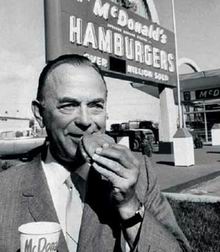
kroc

Luck is a dividend of sweat. The more you sweat, the luckier you get.

Ray Kroc, a high school drop out, attained his first job by employing a bit of dishonesty; the 15 year old young man lied to the military to become an ambulance driver during WWI. The war ended before young Ray could see action, and so Kroc took a job playing piano for a radio station at night and selling paper cups by day. He next became fascinated with a multi-mixer milkshake machine and purchased the marketing rights to it. For the next 17 years, Kroc traveled the country selling his milkshake making miracle to whoever would listen. As he made the rounds to customers, he became intrigued by a hamburger restaurant in San Bernardino, California owned by the McDonald brothers. While the McDonald brothers were satisfied with their small franchise, Kroc believed the burger business had far greater potential. Although Kroc was by then a 53 year old man suffering from diabetes and arthritis and missing both his thyroid and gall bladder, he had a vision of turning the restaurant into a global fast food empire. In 1961, he purchased the McDonalds’s franchise. In only a few years years, Kroc had sold a billion hamburgers and opened the franchise’s 500th store. McDonald’s had begun its campaign to take over the world. The Hamburglar would be proud.

Harry Reid, 1939-
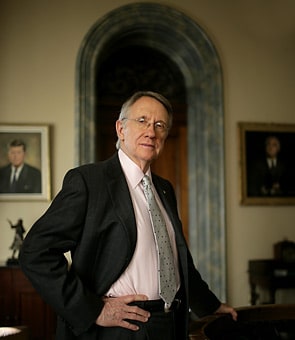
a_nreid_0122

Reid was born in the tiny, abandoned mining town of Searchlight, Nevada: population 200. His father was a miner and alcoholic who possessed only an elementary school education. His mother took in laundry from local brothels to help the family make ends meet. The family lived in a house with two rooms and an outhouse. As a youth, Reid was rough around the edges and loved to use his fists, whether competing as an amateur boxer or taking part in an impromptu rumble in the streets.

Yet he overcame this auspicious start, graduating from Utah State University and attending law school at George Washington University. In order to support his family during law school, Reid would go to class during the day and work as a security guard at night. Reid practiced law before being elected to the Nevada State Assembly in 1967. He then served as Lt. Governor. Losing the senatorial election in 1974, Reid instead took a position as chairman of the Nevada Gaming Commission. In 1982, Reid ran for Congress again, and this time won a seat in the House of Representatives. He then became a US Senator, and steadily moved up the leadership ranks from Democratic Whip, to minority leader, and finally to majority leader, the position in which he currently serves.

Thomas Edison, 1847-1931
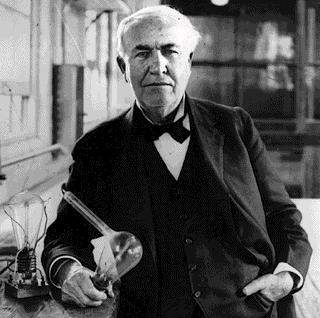
thomas-edison

It is astonishing what an effort it seems to be for many people to put their brains definitely and systematically to work.

Kicked out of school for being easily distracted, Thomas Edison received only 3 months of formal schooling. The rest of Edison’s education came from his mother’s homeschooling and his reading of classic books. Though he lost nearly all of his hearing at a young age, Edison did not let this disability hinder him. He early on showed a tenacious entrepreneurial streak; he sold candy and newspapers aboard trains as a youth and then won a position as telegraph operator when he saved a station agent’s son from being run over by a train. As a telegrapher, he worked 12 hours a day, 6 days a week. Edison requested the night shift so that he could read and do his experiments during the slow evening hours. His constant tinkering paid off; Edison (often with help from his partners) came up with a myriad of inventions, including the phonograph, stock ticker, fluoroscope, kinetoscope, and most famously, the first commercially viable incandescent lamp. “The Wizard of Menlo Park” was both a genius inventor and a savvy business man; he filed more than 1500 patents during his lifetime and founded 14 companies including General Electric.

Larry Ellison, 1944-
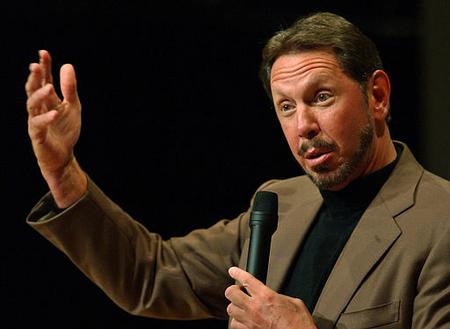
larryellison

The most important aspect of my personality, as far as determining my success goes, has been my questioning conventional wisdom, doubting the experts and questioning authority. While that can be very painful in relationships with your parents and teachers, it’s enormously useful in life.

Larry Ellison was born in the Bronx to an unwed mother; he never knew his father. While still an infant, Ellison was shipped off to Chicago to be taken care of and eventually adopted by, his mother’s aunt and uncle. Ellison grew up in a two bedroom apartment and attended two years of college before dropping out when his adoptive mother died. Interested in computer and software design, Ellison went to work for Ampex Corporation before founding what would become the database company Oracle in 1977 with $2000 of his own money. Greatly successfull, the company made Ellison a billionaire many times over and continues to secure his place as the 9th richest man in the world.

Abraham Lincoln, 1809-1865
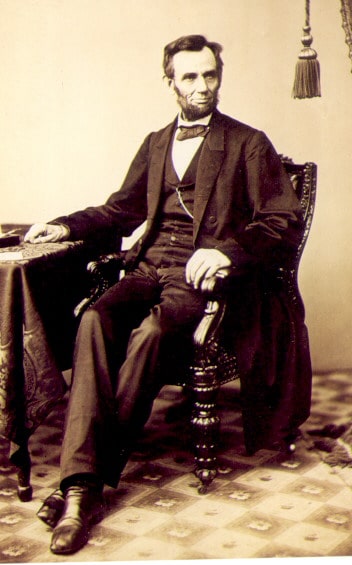
abraham-lincoln

Things may come to those who wait, but only the things left by those who hustle.

Lincoln lacked connections, charisma, good looks, and formal education, and yet became one of the greatest presidents in United States history. Famously born in a one-room cabin to uneducated farmer parents, Abraham Lincoln’s rise to the Presidency has long been the stuff of legend. Lincoln was almost entirely self-educated; he received only 18 months of formal schooling. He offset this disadvantage by voraciously consuming any book he could get his hands on. At age 22, Lincoln packed his meager belongings in a canoe and paddled out on his own. He taught himself the law and became a successful attorney and state legislator in Illinois. Losing his senatorial campaign in 1858 to Stephen Douglas did not deter him from his goals; he persevered against this very same opponent to win the presidency. The rest, of course, is history. Lincoln went on to guide America through her darkest and stormiest hour.

Clarence Thomas, 1948-
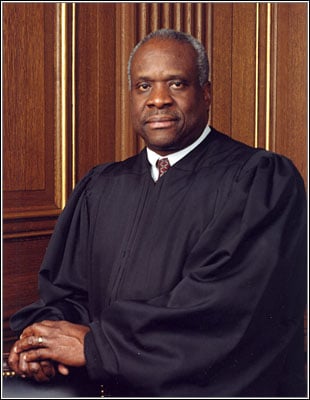
clarence_thomas_official

Clarence Thomas was born in the poor community of Pin Point, Georgia. Abandoned by their father and left homeless after a fire, Clarence and his brother moved to Savannah. They moved in with Clarence’s grandfather, who would have a profound effect on the boy. He taught Thomas the value of hard work by taking Clarence on deliveries for his ice business and having him regularly work on a farm from sunrise to sunset. Thomas became the first person in his family to attend college when he headed off to the College of the Holy Cross. He then received his JD from Yale Law School. After law school, Thomas steadily attained more and more prestigious positions, starting as an assistant to the Attorney General of Missouri and becoming Reagan’s Assistant Secretary of Education for the Office of Civil Rights. GHW Bush appointed Thomas to the Court of Appeals for the District of Columbia Circuit. He finally grasped the legal world’s brass ring when he was confirmed as a Supreme Court Justice in 1991.

Sam Walton, 1918-1992
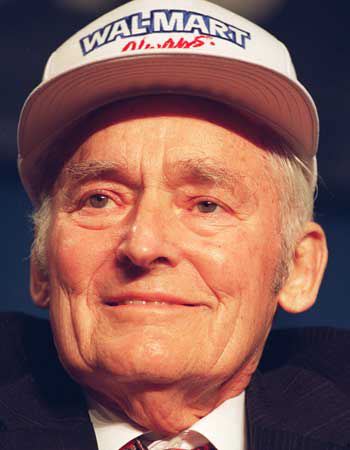
sam_walton

I think I overcame every single one of my personal shortcomings by the sheer passion I brought to my work. I don’t know if you’re born with this kind of passion, or if you can learn it. But I do know you need it.

Now a big-box retailing behemoth, the idea for Wal-Mart came from the mind of an unassuming farm boy from Oklahoma. Walton spent his early years living on his family’s farm, and then moved to Missouri when his father decided to become a farm loan appraiser. Sam showed great ambition from an early age; he became Missouri’s youngest ever Eagle Scout when he received that award in 8th grade, and he was elected class president his senior year in high school. Despite growing up during the Great Depression and working odd jobs like delivering newspapers to help support his family, he excelled academically throughout his school years. He paid his way through the University of Missouri by working as a lifeguard, newspaper delivery boy, and waiter. When he graduated, he took jobs at JC Penney’s and at a DuPont’s munitions plant before serving in the army during WWII.

After the war, Walton was determined to open his own variety store. He pooled the substantial amount of money he saved while in the military and with a loan from his father-in-law, bought a Ben Franklin store in Newport, Arkansas. Walton supplied customers with a wide variety of goods at low prices and kept those prices low by buying in high volume directly from wholesalers. The store was highly successful, and Walton then opened his own store, “Walton’s Five & Dime” in Bentonville. In 1962, Walton introduced the first true Wal-Mart to Rogers, AR. That store, like all his others, turned a nice profit, and Walton began to expand the franchise across the country, making it the world’s largest retailer by 1991. He reigned as America’s richest man from 1985-1988, and were he alive today, he would be the world’s richest man, with wealth double that of Bill Gates.

Harry S. Truman, 1884-1972
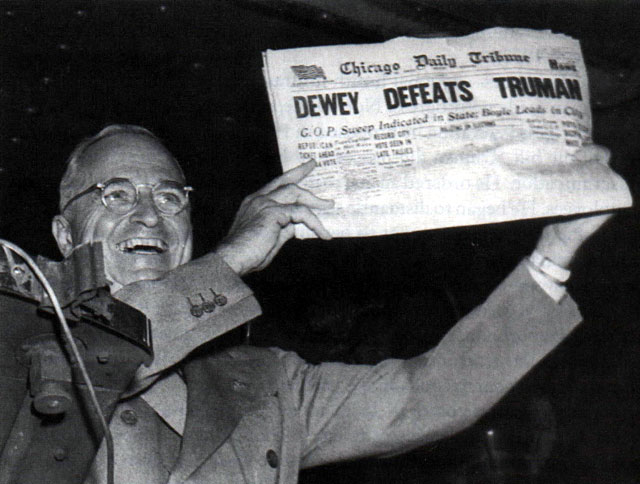
harry

In reading the lives of great men, I found that the first victory they won was over themselves… self-discipline with all of them came first.

Harry S. Truman lived by the motto, “The buck stops here,” long before it officially adorned his Oval Office desk. Such decisiveness was a necessary trait for a man who had to routinely overcome low expectations to win respect. Truman was born into a farming family in Missouri. After high school, Truman was employed in a few odd jobs before returning to labor on the family farm. College was not in the cards for Harry; he couldn’t afford to attend any school except West Point, and they turned him down because of his poor eyesight. Truman would thus become the only president to serve after 1897 who did not hold a college degree.

Yet, Harry was determined to make the best of his circumstances.

He joined the National Guard and served in WWI. His eyesight should have prevented him from joining up, but Truman memorized the chart in order to pass. Truman served heroically, and became a Colonel in the Guard. After the war, Truman opened a haberdashery in Kansas City that went bankrupt during a recession in 1921. He then was elected as a county judge. In 1934, he became a US Senator. Ten years later, he was chosen to be FDR’s VP. When FDR died, Truman had finally ascended to the highest office in the land.

When he ran for reelection in 1948, Truman was, as he had been in his senatorial campaigns, the true underdog. He had to fight fiercely just to secure the nomination, and during the general election, determined to get his message out to the people, he crisscrossed the nation in an energetic whistle-stop tour. While the Democrat’s prospects looked bleak, Truman vigorously came from behind and pulled off an upset win. He had spent his whole life giving his naysayers hell, and he had done it once again.

Sean Combs, 1969-
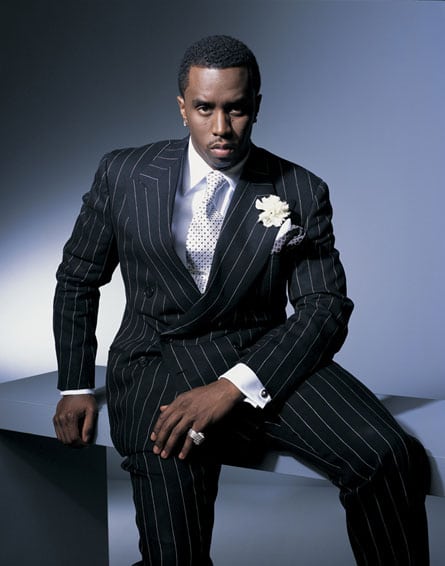
diddych8

I’ve never been surprised about what happened to me. I’ve put in hard work to get to this point. It’s like when you become a lawyer – if you’re bustin’ your ass, you’re not surprised when you get your degree. I came in to win, you know. This is why I stay up late while other people are sleeping; this is why I don’t go out to the Hamptons.

Puff, Puff Daddy, P. Diddy-whatever you want to call him, the name Sean Combs most deserves is that of self-made man. Mr. Combs claims to work harder than anyone else in the entertainment business, and he has the success to show for it. Born in public housing projects in Harlem, Sean’s father was shot to death when Sean was only 2. At age 12, Combs, who was too young to officially have his own paper route, found a way around the rule by taking over the routes of several older boys and giving them 50% of his earnings. He was soon making over $700 a week as a paperboy. After high school, Mr. Combs interned at Uptown Records while he attended Howard University. He dropped out and took an executive position with the company. Fired from the label in 1993, Combs formed his own company-Bad Boy Records.

In addition to producing hit artists like the Notorious B.I.G., P. Diddy started putting out his own successful rap records and diversifying his business interests. His enterprises now include the Sean John clothing line, a cologne, the Making the Band television series, and a restaurant in Atlanta. With a net worth estimated to be around $324 million, Combs has taken full ownership of his life and done it with style.

Henry Ford, 1863-1947
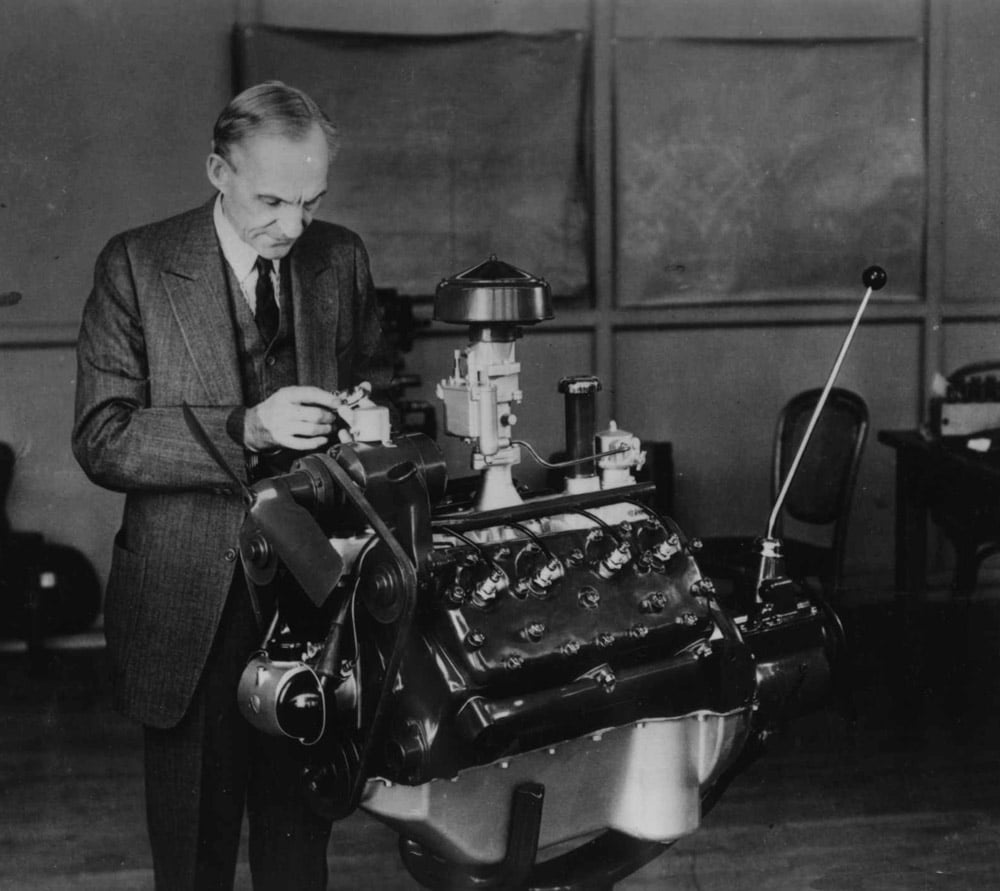
Henry Ford with V-8 Engine

Life is a series of experiences, each one of which makes us bigger, even though sometimes it is hard to realize this. For the world was built to develop character, and we must learn that the setbacks and grieves which we endure help us in our marching onward.

Very few men will ever have the chance to completely revolutionize the American way of life; even fewer who do so will come from obscure backgrounds. Henry Ford was born in 1863 on a farm near Detroit, Michigan. His father wanted Henry to take over the family farm, but Henry had other plans. At age 16, he left home to become a machinist’s apprentice. After several years, he returned to farm work, and also ran a sawmill. But his love for engineering kept calling him away. In 1891, Ford was hired by the Edison Illuminating Company, and he worked his way up to chief engineer. He saved money scrupulously until he had enough so he could quit and work on his experiments with gasoline engines.

Ford began creating and testing self-propelled vehicles, but could not produce them cheaply and efficiently as he desired. With this goal in mind, Ford and partner Alexander Malcomson founded Ford Motor Co. Ford’s technical smarts were matched by his business savvy. He offered his auto workers $5 an hour, nearly double the going rate. The country’s best mechanics thus flocked to Ford, and this greatly slowed employee turnover and increased productivity. And he introduced moving assembly belts to his plants, which greatly improved efficiency. Such ideas helped make the Model T an affordable, immediate, and widespread success; half of all cars on the road in 1918 came from Ford factories. Ford found equal success with his next model, the Model A, which he had large part in designing. Ford secured sole ownership of the company for his family, expanded the business internationally, reaped a massive fortune, and introduced America to its ongoing love affair with the automobile.

Ronald Reagan, 1911-2004
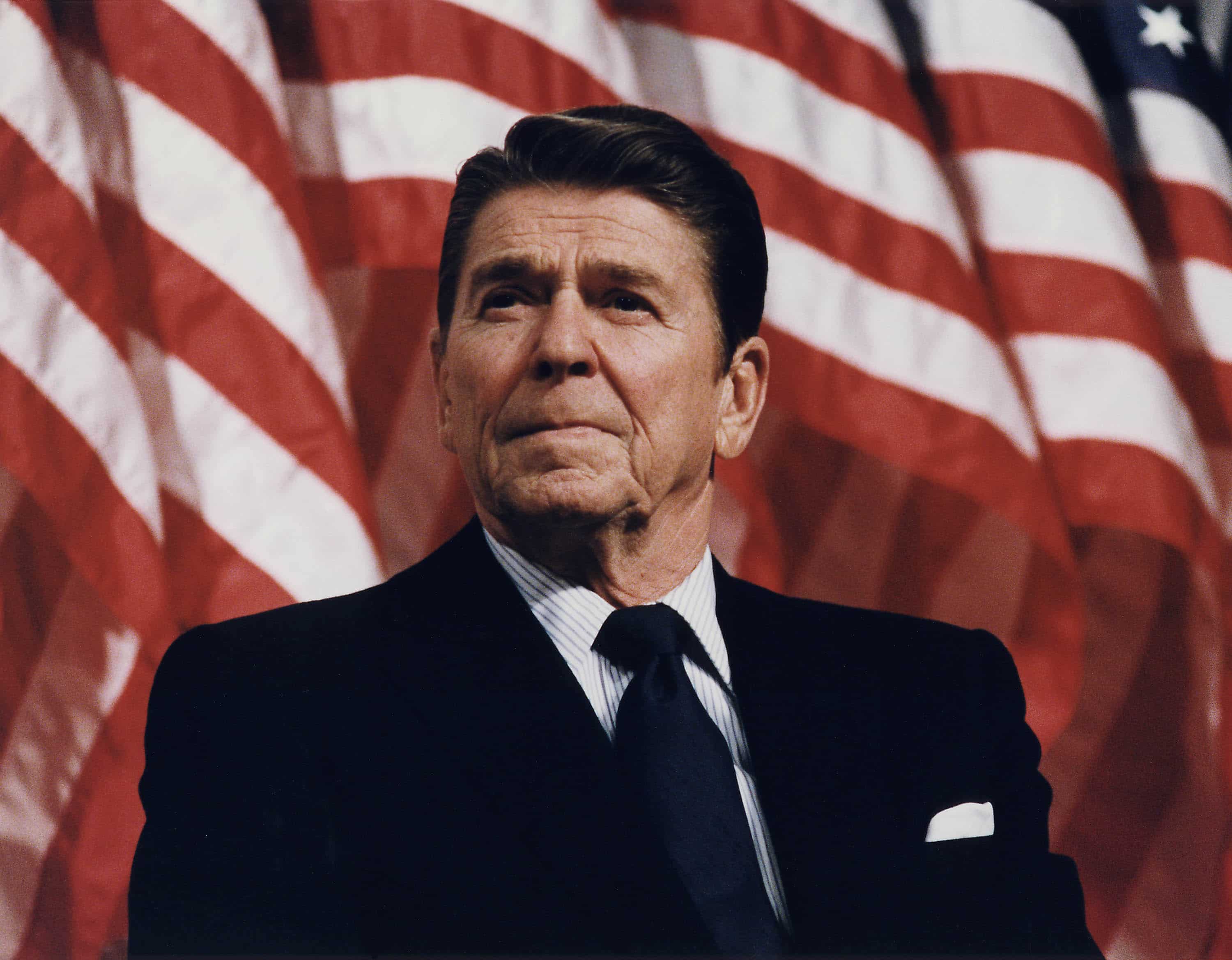
reagan-at-durenberger-rally

My philosophy of life is that if we make up our mind what we are going to make of our lives, then work hard toward that goal, we never lose – somehow we win out.

Any man who can turn an acting career into a successful run for the presidency certainly earns the title of self-made man. There was no silver spoon in the mouth of Ronald Regan when he came into the world in 1911. Born in Tampico, Illinois, Reagan’s father was a salesman who was always looking for better work. Reagan thus grew up moving from one tiny town in Illinois to the next, often living in apartments above banks and stores. The Gipper attended the definitively not ivy league Eureka College, mostly, by his own admission, to continue playing football. After college, he became a radio announcer and landed a film contract with Warner Brothers. After a stint in the military, Reagan became the president of the Screen Actors Guild. He began his foray into politics by working on Barry Goldwater’s campaign in 1964. Then in 1966, without holding prior political office, Reagan was elected governor of California. Though he failed to win the Republican nomination for the presidency in 1976, Reagan was not discouraged and won not only the nomination, but also the White House in 1980.

Andrew Carnegie, 1835-1919
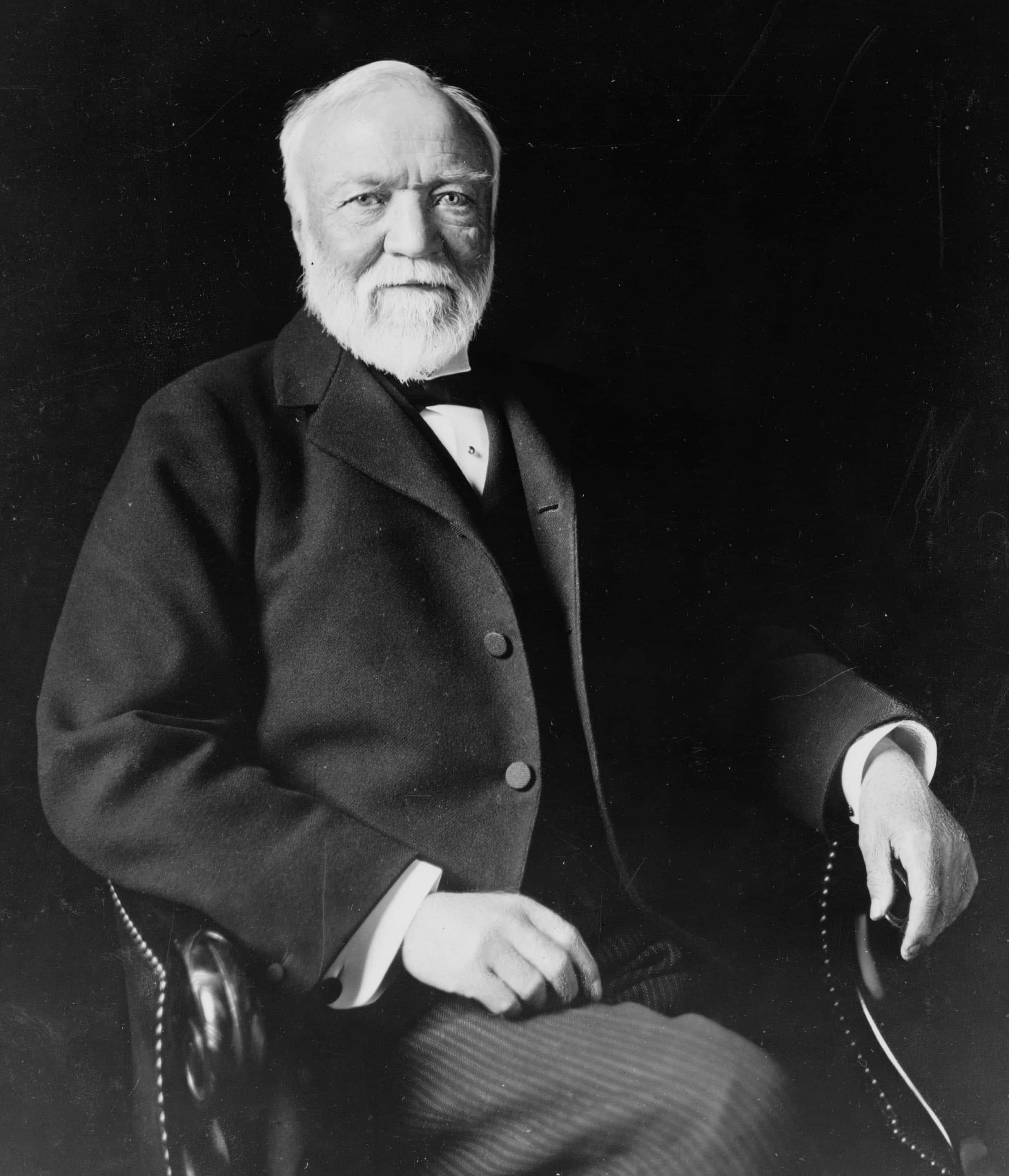
andrew_carnegie_three-quarter_length_portrait_seated_facing_slightly_left_1913

People who are unable to motivate themselves must be content with mediocrity, no matter how impressive their other talents.

Carnegie represents the epitome of the self-made man. His father was a Scottish hand-loom weaver, who moved with his family to America when Andrew was 13. Carnegie’s first job was working as a bobbin boy at a textile factory, making $1.50 a week. He subsequently took jobs as a boiler tender, bookkeeper’s clerk, and telegraph delivery boy. All the while he read to educate himself and worked to mitigate his thick Scottish accent. In 1853, Carnegie landed a job with the Pennsylvania Telegraph Co.

He religiously saved his money and reinvested it in the railroad business. He worked his way up to being superintendent of the Pennsylvania Railroad’s Western Division and then supervised the Union’s telegraph lines during the Civil War. He continued to make incredibly wise investments with his savings which reaped him handsome dividends. After the war, he left the railroad business and began to focus on building and investing in ironworks. By bringing great efficiency to the business, taking over one steel company after another, and utilizing vertical integration, Carnegie soon created an empire of steel and iron.

In 1901, Carnegie sold his steel holdings to JP Morgan for $480 million. Carnegie had long preached what he called “The Gospel of Wealth,” a philosophy in which a man should aim to acquire as much fortune as possible and then give it away to others. On this point, (unlike several others) Carnegie was a man of his word. During his lifetime he donated $350,695,653 to philanthropic causes; upon his death he gave away the last $30,000,000 of his wealth.

Booker T. Washington, 1856-1915
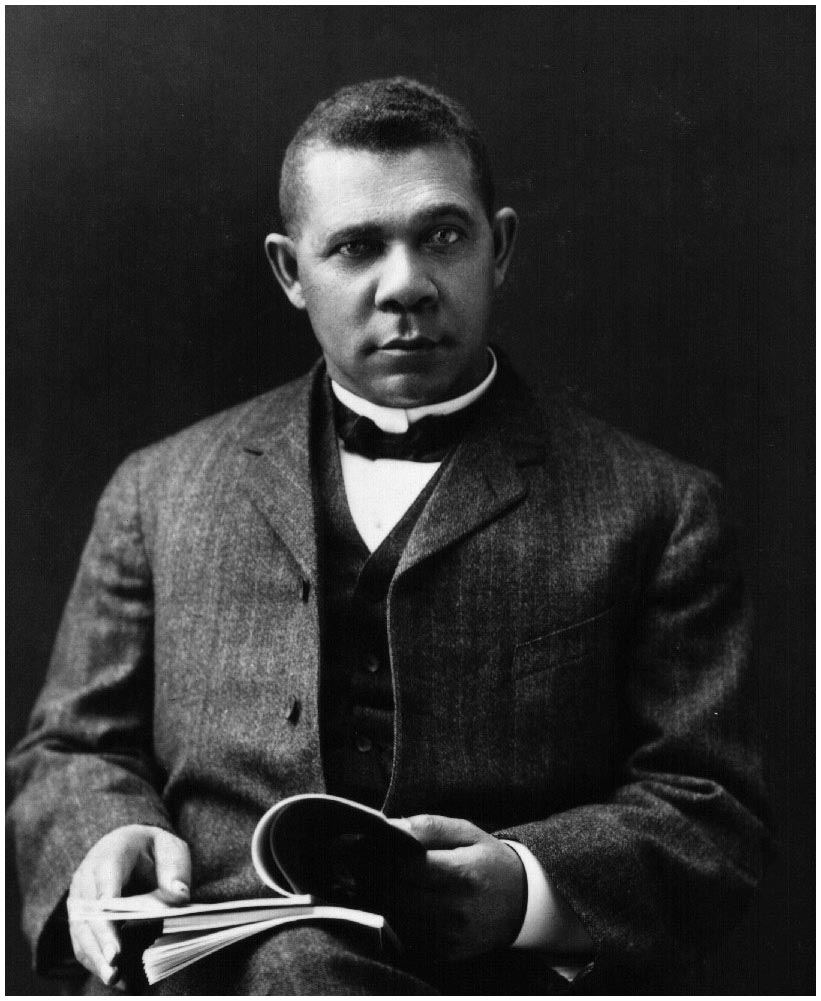
bookertwash

I have learned that success is to be measured not so much by the position that one has reached in life as by the obstacles which he has had to overcome while trying to succeed.

Booker T. Washington was often criticized by fellow African-American advocates like WEB DuBois for his approach to helping his people progress. While DuBois felt that the fight for civil rights should have the top priority, Washington argued that blacks had to first work hard, manifest the virtues of industry and thrift, and achieve economic success. Once this occurred, he argued, the rights they sought would naturally follow. While Dubois felt that this approach was harmfully accommodating, such a philosophy was a direct product of Washington’s personal experience, a life which had taught him that man can work to make of himself anything he desires.

Washington grew up as a slave until freed by the 13th amendment. As a freedman, he took work in salt and coal mines before entering Hampton Institute in pursuit of an education. The president of Hampton recommended that Washington be made the head of the newly formed Tuskegee Institute. From this position, Washington soon came to prominence as a nationally known advocate for the uplift and education of African-Americans. His efforts to befriend many of the rich corporate heads of this time and persuade them to donate their money to the education of his fellow freedmen met with great success and led to the building of over 5,000 schools in the rural South. His profile was further raised by the brisk sales of his autobiography, Up from Slavery, and his invitation from President Theodore Roosevelt to become the first African-American to dine at the White House

Milton S. Hershey, 1857-1945
miltonhershey_young

Milton S. Hershey had to face some bitter failure before he was able to achieve sweet success. Hershey was born on a farm in Pennsylvania in 1857. Due to his father’s frequent failed business schemes, the family moved frequently, and Milton’s parents separated. Hershey dropped out of school after the fourth grade. He was then apprenticed to a printer, but did not take to that line of work. He began an apprenticeship with a candymaker and after four years or learning the trade, attempted to open his own shop. This venture failed as did his two subsequent efforts in New York City and Chicago. At age 28, he returned home to Pennsylvania as an unemployed man who had thus far failed to make anything of his life. But Hershey’s luck would soon change; he started a caramel company and this time, his delicious confections caught on.

During his visit to the 1893 World’s Columbian Exposition, he became fascinated by the German chocolate making machines. He purchased them for his Lancaster caramel factory and began producing various chocolaty confections. Sensing the great potential in chocolate treats, Hershey sold his successful caramel company in 1900 for a whopping one million dollars. With this new wealth he bought 40,000 acres of land near Lancaster, Pennsylvania and built the world’s largest chocolate factory and a model town for his employees. He was determined to bring what was then a Swiss luxury product-milk chocolate-to the masses. He tinkered with the formula until Hershey’s milk chocolate was ready to be introduced to the public and become the necessary ingredient for s’mores.

Walt Disney, 1901-1966
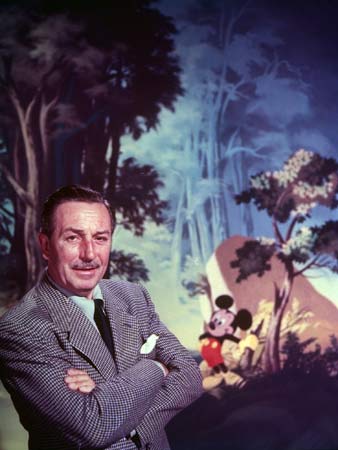
walt-disney-you-dont-work-for-a-dollar-e28094-you-work-to-create-and-have-fun

The way to get started is to quit talking and begin doing.

The man who would one day create the “happiest place on earth,” experienced a less than idyllic childhood. Walt Disney’s father wandered from one job to another looking to find success, and often needing to rely on his brother to stay afloat. Walt lacked not just financial security, but for affection; his father was a cold and abusive man. Walt was determined to blaze his own path of success and not end up like his dad. At age 16, he dropped out of high school and served in the ambulance corps during World War I. After the war, Disney found work creating ads for businesses in Kansas City. He was fascinated by the emerging field of animation and decided to set up his own animation business. Unable yet to manage money effectively, the business went bankrupt.

Then Disney set up a studio in Hollywood and began turning out cartoons, culminating in the enormously popular Steamboat Willie in 1928. Over the next several years, Disney introduced equally beloved characters such as Donald Duck, Goofy, and Pluto. In 1934, Disney began to work on his most ambitious idea yet: a full-length animated feature. Dubbed “Disney’s folly” by his critics, most thought the idea would spell the demise of the Disney studio. Instead, Snow White and the SevenDwarves was a smashing success. The film was followed by a myriad of other beloved full-length features and animated shorts. In the 1950′s Disney expanded the work of his company to include the production of live-action films. Disney also completed an ambitious project few believed could be a success: the 1955 opening of Disneyland. Disneyworld followed in 1964. Walt always understood the desires of average people. While critics lamented the artificially wholesome world depicted in his family-friendly movies and theme parks, the public fell in love with it and bought into Disney’s vision completely.

Barack Obama, 1961-
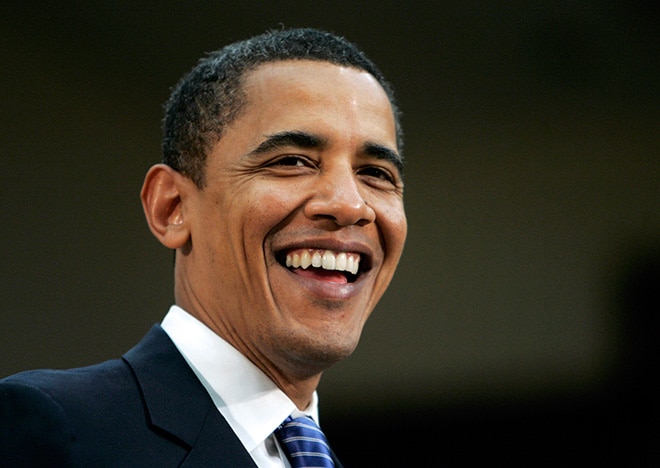
obama_660x

Making your mark on the world is hard. If it were easy, everybody would do it. But it’s not. It takes patience, it takes commitment, and it comes with plenty of failure along the way. The real test is not whether you avoid this failure, because you won’t. It’s whether you let it harden or shame you into inaction, or whether you learn from it; whether you choose to persevere.

His story is of course well known by now, but it bears repeating,and certainly merits him a spot on this list. Obama’s childhood was far from typical. Obama was born to a white mother and Kenyan father in Hawaii. His father went back to Kenya when he was only 2 and saw his son only once more. His mother married again, this time to an Indonesian, and the family moved to Indonesia. Barack lived there for several years and then returned to Hawaii to live with his grandparents. Obama graduated from Columbia University, worked as a community organizer in Chicago for 3 years, and then went to Harvard Law School. While there he became the first African-American to be elected as president of the Harvard Law Review. Obama returned to Chicago and spent 12 years as a professor at the University of Chicago Law School. He was elected to the Illinois State Senate in 1996, and the US Senate in 2004. After only one term as Senator, Obama won the presidential election and became the first black president in United States history.

Ben and Jerry, 1951-
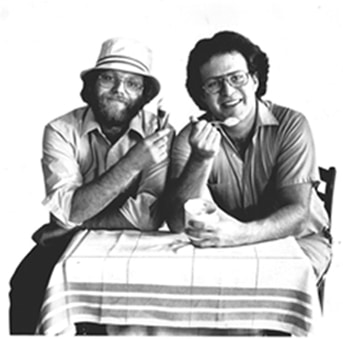
ben-jerry-smaller

Ben Cohen and Jerry Greenfield were childhood buds who early on bonded over their preference for eating over gym class. After high school, Ben attended and dropped out of several colleges, never quite finding his calling. He eventually took a job teaching pottery on a farm in the Adirondacks. Jerry attended and graduated from Oberlin college. Upon graduation, he unsuccessfully applied for admission to medical school. When the guys met up again, both were rather adrift professionally. They decided to open an ice cream shop in Burlington, Vermont. After taking a $5 correspondence course on ice cream making, they opened their store in a dilapidated gas station. The guys’ rich, chunky ice cream gained a popular following in the community. They soon began selling pints of their ice cream to local grocery stores. During the next several years, Ben and Jerry were able to expand their franchise and by 1988 had stores in 18 states. Ben and Jerry’s became a nationally known brand, and the company was bought by Unilever in 2000 for $326 million dollars, enough to buy a whole mountain of Cherry Garcia.

John Sperling, 1921-
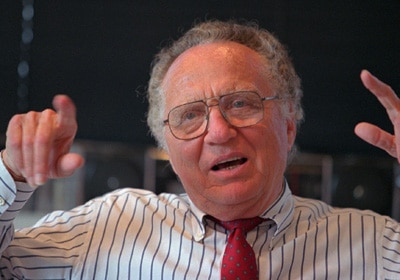
John Sperling was born to a poor sharecropping family and struggled in school. Dyslexic and semiliterate when he graduated from high school, Sperling joined the merchant marines and sailed the world. Along the way, he taught himself to read. During WWII, he served in the Navy. When the war ended, Sperling attended Reed College, completed graduated work at Berkley, and earned his Ph.D from Cambridge; his childhood teachers had clearly underestimated him.

Sperling spent the next couple of decades as a professor, but he never could shake his concern that colleges were filled with the middle and upper classes, while those who were not well-off were left out of academia. At age 53, he decided to do something about it. He tried to bring a program for working adults into the university but was rebuffed. So he created his own university for adults. In 1976, he started the University of Phoenix, a franchise that would quickly expand around the country. This for-profit enterprise not only gave working adults a alternative for regular college, it made John Sperling a billionaire.

David Sarnoff, 1891-1971
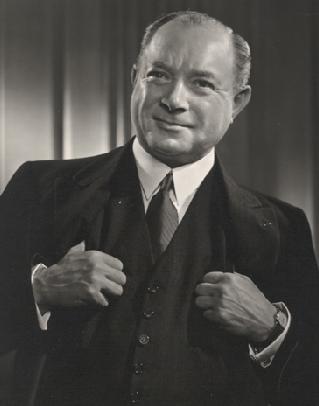
10324

Success, in a generally accepted sense of the term, means the opportunity to experience and to realize to the maximum the forces that are within us.

David Sarnoff was born to a poor family in a small Jewish village in what is today Belarus. His talents were recognizable from a young age, and his family planned on David becoming a rabbi. These plans were interrupted when the family emigrated to the United States in 1900. Living in New York City, young David helped support the family by selling newspapers before and after school. Then, when his father was stricken with tuberculosis, David was forced to become the man of the house and its main breadwinner. He found a position as the Marconi Wireless Telegraph Company of America. Sarnoff worked hard to educate himself to the ins and outs of the communications business and steadily rose through the company ranks. He paid close attention to the developing radio technology and suggested to his superiors that they begin to design and build a radio for the average consumer. His idea for a “radio music box” was ignored by his bosses at the Marconi company, and his ideas continued to fall on deaf ears when the company was bought by GE and became RCA.

Yet, as the 1920′s dawned and Sarnoff’s predictions about the popularity of radio were proved to be quite prescient, Sarnoff began to get the recognition and respect he deserved. RCA launched NBC radio in 1926, and only a few years later, Sarnoff was made its president. After building the AM radio business into a success, Sarnoff turned his attention to the television, which he sensed was going to be bigger than radio. Sarnoff, now the president of RCA, invested heavily in the research and development of the new technology. His gamble paid off when NBC introduced television to the American public at the 1939 New York’s World Fair. The next day, RCA began selling their television sets in stores. The television business exploded after the war, and Sarnoff again led NBC to dominance by being first to introduce color television to the country.

Arnold Schwarzenegger, 1947-
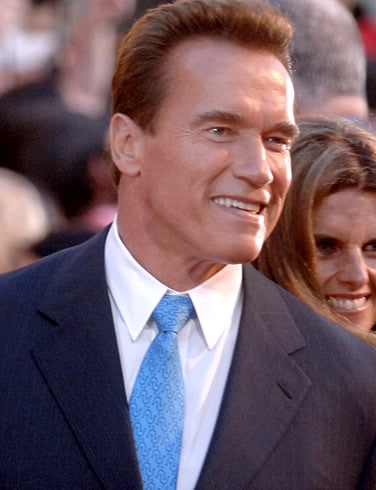
arnold-schwarzenegger-picture-1

For me life is continuously being hungry. The meaning of life is not simply to exist, to survive, but to move ahead, to go up, to achieve, to conquer.

Sharing much in common with another famous actor-turned-governor-of –California, Arnold Schwarzenegger made the improbable leap from bodybuilder and actor to politician. Arnold was born in a small village in Austria. His cold and abusive father was the local police chief, and yet money was always tight for the family. Life in the unhappy household left Arnold determined to leave home and find fame and fortune. Deciding at an early age to make bodybuilding a career, Schwarzenegger started pumping iron at age 14. He also studied psychology to better sharpen his mind’s strength and willpower. Nothing could keep Schwarzenegger from his love of bodybuilding; as a youth he busted into the gym when it was closed on weekends and as a soldier he went AWOL to enter a competition.

Years of sweat and toil paid off when Arnold, at age 20, became the youngest ever winner of the Mr. Universe competition, a title he would win four more times. He continued training while simultaneously attending business school and working at a gym. At age 21, he moved to America to become a star of the silver screen. He continued to compete in bodybuilding and won the Mr. Olympia title seven times.

Arnold’s entrance into film was far more difficult than his workouts. With a thick accent and bulking body, he met many rejections before finally landing roles. After becoming a blockbuster action-star, Schwarzenegger’s next obstacle to conquer was politics. In 2003, overcoming his inexperience, accent, and having appeared in as Mr. Freeze in Batman and Robin, Arnold won the California recall election and became the governor or California.

Source: artofmanliness.com

Monday, August 1, 2011

A business success story — with a twist

Super Pretzel magnate tells Business Nation how he made his millions

He became a father at 18, dropped out of school and found a factory job to make ends meet, until hard work and a twist of fate led him to a fortune he’d never imagined.

It's almost like a fairytale. A little Jewish street kid from the wrong side of the tracks buys some defunct assets and grows the enterprise into what today amounts to a $600 million a year company.

Gerry Shreiber’s success began at the ballpark, home not only to the hallowed hot dog, but that other classic stadium snack: the salty jumbo pretzel. This doughy concoction might never have been a hit were it not for Shreiber’s vision of a pretzel empire.

“Every time I see one of our fans going up there and buying it, I feel a special kind, you know how the back of your neck kind of — you get that little feather feeling in there,” Shreiber said on a recent visit a to Philadelphia Phillies home game.

As CEO of J&J Snack Foods, Shreiber is the man behind the pretzel. With a roll and a twist, J&J churns out a half-billion pretzels a year. It all began in 1971 when Schreiber struck up a conversation with a salesman who told him about a failing pretzel company.

“A couple of weeks later, I bought the assets of a bankrupt soft pretzel company for $72,000,” he said.

That $72,000 bought Shreiber some old baking equipment and an eight-person company selling a little-known product.

“The traditional stadiums, baseball stadiums, in those days had a very limited menu,” he said. “They didn't know what a soft pretzel was.”

Convincing stadiums, movie theaters and other vendors that soft pretzels could be the next big thing took some creativity.

“It didn't have a name,” said Shreiber. “So I thought — ‘Super Pretzel.’ Super Pretzel, Superman. And I found these special trees with hooks on it. And I built a glass box around it. And we attached the motor to it. And all of a sudden we had a revolving tree.”

Dreaming big
With that, the super pretzel was born and super sales quickly followed. At the company’s factory in Pennsauken, N.J., J&J bakes 2 million pretzels a day.

“I instructed my people that I want to have a line which feeds the dough automatically, very little labor, that will produce 5,000 pounds an hour with hardly anybody touching the product,” he said. “And my chief engineer said to me at the time, ‘Gerry, you're dreaming.’ And I said, ‘All right, we'll call it the dream line.’ ”

J&J has made Forbes magazine’s list of the “200 Best Small Companies” seven times since it went public in 1986. And it doesn’t stop with pretzels. Shreiber has a knack for turning around distressed snack food brands — recent acquisitions include Fruit-A-Freeze and Whole Fruit sorbets.

The simple, soft, salty pretzel has brought him a personal fortune worth over $100 million.

Shreiber also has a soft spot for animals and keeps 30 horses, six dogs, five cats, two goats, one pig and one bunny on his New Jersey farm. He is a prominent donor to animal's charities — including the University of Pennsylvania School of Veterinary Medicine — and starts every day with a walk on the farm, animals in tow, dreaming up the next super snack food idea.

“I've been doing this now for 36 years,” he said. “And if I tack that on — for the next 36 years as much — I think maybe that'll set a record.”

For each of those 36 years, he’s seen steady growth: 144 consecutive quarters of increased sales and profits.

Something for budding entrepreneurs to chew on.

Source: www.msnbc.msn.com
